


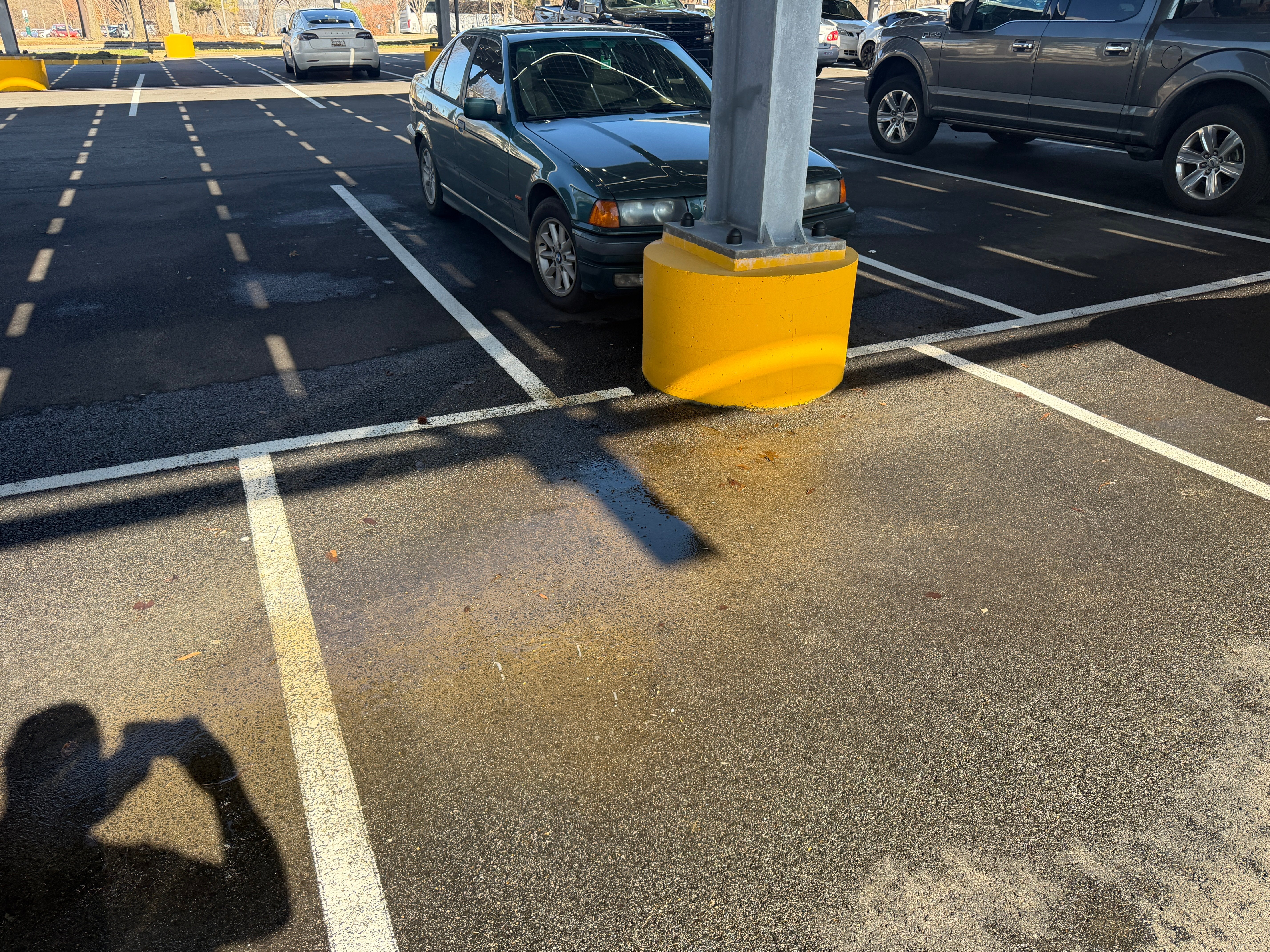
Solar Parking Lot Canopies and Pavement Problems:
 Why Drainage and Underdrains Must Be Planned Before Installation
Solar parking lot canopies are becoming increasingly common across corporate campuses, hospitals, universities, and office complexes. They generate renewable energy, provide shaded parking, and help organizations meet sustainability goals.
But there is an issue that is rarely discussed before these projects are built.
Solar canopies fundamentally change how water behaves on a parking lot.
Without proper drainage planning, property owners can experience:
- Water surfacing through asphalt cracks
- Moisture rising around canopy foundations
- Persistent wet pavement
- Ice formation during winter months
- Premature asphalt deterioration
Many of these problems occur because solar canopy installations alter sunlight exposure and stormwater movement across the pavement.
Understanding these issues before installation can help prevent long-term maintenance headaches.
How Solar Canopies Change Parking Lot Drainage
Traditional parking lots are designed with drainage patterns that allow rainwater to move across the pavement surface and into catch basins.
Solar canopies introduce several new variables:
• Large structural columns penetrating the pavement
• Concrete foundations interrupting base layers
• Concentrated water runoff from solar panels
• Areas of pavement that rarely receive direct sunlight
Instead of water spreading evenly across the pavement, runoff can become concentrated around canopy support structures and between parking rows.
Over time, this concentrated moisture begins to affect the pavement structure.
Why Water Begins Surfacing Around Canopy Columns
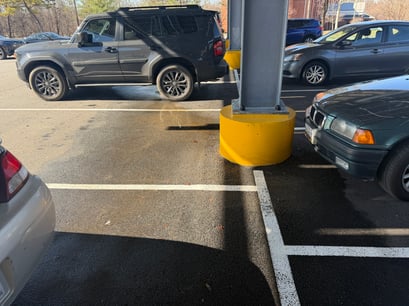
One issue commonly observed after solar canopy installation is groundwater surfacing through cracks or around the base of support columns.
This can occur for several reasons.
When canopy foundations are installed, large sections of pavement and base material are excavated to create deep concrete footings. These footings can disrupt the natural drainage pathways within the stone base layer.
If groundwater is present beneath the pavement, the concrete foundations can act as barriers that redirect water upward toward the surface.
The result is pavement that appears to have moisture rising from below, especially after rainfall or during freeze-thaw cycles.
The Unique Problem of Reduced Sunlight
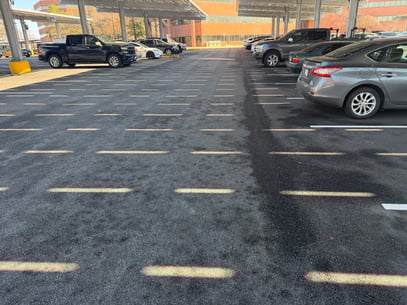 Another issue solar canopies create is reduced solar exposure on the pavement below.
Under normal conditions, sunlight helps dry parking lots after rain or snow events. When large canopy structures block sunlight, pavement underneath can remain damp for long periods.
This creates two problems:
- Moisture stays trapped in the asphalt surface longer
- Ice can form more easily during cold weather
Even when surrounding pavement dries quickly, areas under canopies can remain wet for hours or even days.
Winter Icing Risks Under Solar Canopies
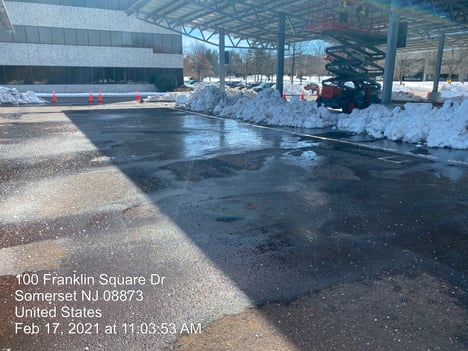 In colder climates, solar canopies can create unexpected winter safety hazards.
Because sunlight rarely reaches the pavement beneath the panels, meltwater from snow or rain may not evaporate quickly. When temperatures drop overnight, these damp areas can freeze.
This leads to isolated icy sections within the parking lot, particularly:
- Between canopy rows
- Near support columns
- In shaded parking stalls
Facility managers may notice that ice forms only under the canopy structures, even when the rest of the parking lot is dry.
This can increase slip-and-fall risks and require additional winter maintenance.
Concentrated Water Runoff From Solar Panels
Solar panels shed water much differently than traditional open parking lots.
Instead of rainfall dispersing across the pavement surface, the panels often channel water to specific edges where it drops in concentrated streams.
This concentrated runoff can:
- Accelerate pavement erosion
- Wash away fine aggregates
- Increase cracking along parking rows
- Overload localized drainage areas
Without proper design, these runoff patterns can cause premature pavement deterioration.
Why Installing Underdrains Is a Smart Preventative Measure
One solution that is often overlooked during canopy projects is the installation of subsurface underdrain systems.
Underdrains are perforated pipes installed beneath the pavement structure that collect groundwater and redirect it away from the parking lot base.
Installing underdrains before canopy construction can help:
• Relieve hydrostatic pressure beneath the pavement
• Prevent water from surfacing through cracks
• Reduce base saturation
• Improve long-term pavement performance
By giving groundwater a controlled path to exit the pavement structure, underdrains help maintain a stable and dry base layer.
Planning Drainage Before Solar Installation
Unfortunately, many solar canopy projects focus primarily on electrical infrastructure and structural design, while pavement drainage receives less attention.
Ideally, parking lot owners should perform a drainage assessment before canopy construction begins.
This assessment can identify:
- Areas where groundwater is already present
- Existing drainage limitations
- Pavement sections prone to saturation
- Opportunities for installing underdrains
Addressing these issues before the canopy is built is significantly easier than correcting them afterward.
Solar Canopies and Pavement Maintenance
Solar canopies offer many benefits, but they also introduce new maintenance considerations.
Property owners should monitor areas beneath canopy structures for:
- Persistent damp pavement
- Water surfacing through cracks
- Early signs of pavement deterioration
- Winter icing patterns
By understanding how these structures influence water movement and pavement conditions, facility managers can take proactive steps to protect their parking lot investment.
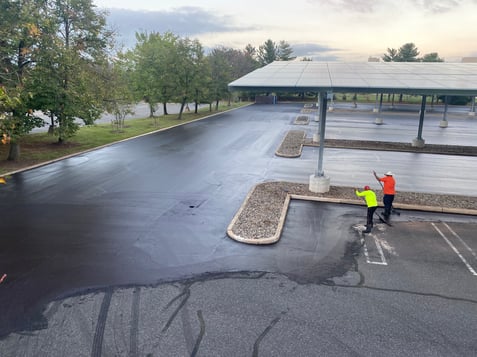
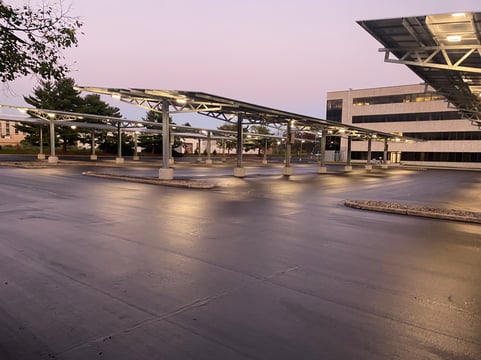
Pavement Maintenance Challenges Under Solar Canopies: Sealcoating Cure Issues
Solar parking lot canopies not only affect drainage and icing patterns — they also create unique challenges when performing routine pavement maintenance such as asphalt sealcoating.
Sealcoating relies heavily on sunlight, heat, and air movement to properly cure and form a durable protective surface. When large canopy structures block direct sunlight, the pavement underneath can remain cooler and damp for extended periods. This slower drying environment can interfere with the normal curing process.
In areas beneath solar panels, sealcoating may take significantly longer to dry compared to open sections of the parking lot. If the coating is exposed to traffic too soon, it can result in:
- Tracking and scuffing from vehicle tires
- Uneven surface appearance
- Premature wear of the sealcoat film
- Reduced overall lifespan of the treatment
Because airflow is also restricted beneath canopy structures, moisture can remain trapped on the pavement surface even during otherwise favorable weather conditions.
For this reason, pavement maintenance planning must be approached differently in parking lots with solar canopies.
Sealcoating in these environments is generally most successful during hot summer conditions, when higher pavement temperatures and increased wind help accelerate the curing process. Scheduling work during periods of strong sun exposure, low humidity, and adequate air movement can improve coating performance and reduce the risk of damage from early traffic reopening.
In some cases, contractors may need to extend curing times or phase maintenance work more carefully to ensure the sealcoat fully hardens before vehicles are allowed back onto the surface.
Understanding how solar canopy shading affects pavement maintenance allows property managers to protect their investment and achieve better long-term results from preservation treatments.
Final Thoughts
Solar parking lot canopies are an excellent sustainability investment, but they change the environmental conditions of the pavement beneath them.
Without proper drainage planning, property owners may experience issues ranging from groundwater surfacing to persistent winter icing.
Installing underdrains and evaluating drainage conditions before canopy installation can help ensure the parking lot continues to perform well long after the solar panels are installed.
Already Seeing Water Issues Under Your Solar Canopies?
If your solar canopy installation is already complete and you are now noticing water surfacing through cracks, damp pavement around columns, or persistent wet areas that won’t dry, you are not alone.
These types of issues often develop after installation, once underground drainage patterns have been altered and groundwater begins finding its way to the surface.
The good news is that these problems are typically correctable with the right approach.
We recently put together a detailed guide that walks through:
- How to identify the source of underground water
- Why moisture begins surfacing after canopy installation
- Retrofit underdrain solutions
- Drainage correction strategies
- How to restore long-term pavement performance
👉 If you’re currently dealing with these conditions, you can read the full remediation guide here: How to Fix Underground Water Problems Under Solar Parking Lot Canopies
This guide is specifically designed for facility managers and property owners dealing with existing moisture issues, and outlines practical, real-world solutions that can be implemented even after the canopy structures are already in place.



Leave a Comment