


How Much Does It Cost to Pave a 100,000 Sq. Ft. Parking Lot?
(2026 Long Form Buyers Guide)
(Published February 1, 2026 - Updated September 1, 2026)
Why this is a long-form guide
Most articles about paving give you a quick price and move on.
That’s not how major capital decisions should be made.
This guide is intentionally detailed.
We walk a real 100,000 sq. ft. parking lot together, explain what actually fails, show what most contractors miss, and break down real New Jersey pricing so you can make an informed decision — not just chase the lowest number.
If you’re just looking for a quick ballpark, we also have a short version.
But if you want to understand paving the right way before spending hundreds of thousands of dollars, this is the guide to read.
Short Answer (What You Came Here For):
Milling & Paving a 100,000 sq. ft. commercial parking lot in 2026 typically costs:
✔ $190,000 – $450,000
Quick Answer
Bare 2" mill & pave only:
💲 $1.90 – $2.50 per square foot
For 100,000 sq ft:
💲 $180,000 – $250,000
But most real projects:
💲 $250,000 – $450,000+ depending on repairs and prep work
The difference is always what’s happening underneath the asphalt.
So What Does a Real 100,000 Sq. Ft. Paving Project Usually Cost?
After walking dozens of lots across New Jersey, here’s what we’ve learned:
Very few commercial properties only need “mill and pave.”
That’s the surface layer.
But most older parking lots also need structural fixes underneath — the stuff you don’t see until you actually walk the site.
So when you scope a project correctly — not just price it by square foot — the real-world budget usually looks something like this:
💲 Typical 100,000 Sq. Ft. Paving Budget Breakdown
2" Milling & Paving (surface only):
$190,000 – $250,000
Full-depth box-out repairs (failed areas):
$13 – $20 per SF of affected areas
Underdrain / underground water remediation:
$60 – $80 per linear foot
Catch basin rebuilds:
$2,500 – $5,000 per basin
ADA concrete stalls, paths of travel & compliant signage:
$9,000 – $13,000 per stall
Additional drainage or subgrade stabilization:
Costs vary depending on severity and site conditions
What this typically means in the real world
Most 100,000 sq. ft. lots we evaluate land somewhere between:
🏦 $250,000 – $450,000+
Depending on how much structural work is required.
Some come in lower if the base is solid.
Some go higher if there are drainage or foundation problems.
But almost never does a large NJ lot only need “just paving.”
And that’s exactly why we walk every site first.
Because once you understand what’s underneath…
The price makes a lot more sense — and the pavement lasts a lot longer.
Now let’s walk through EVERYTHING you need to know to get this right — transparently — from a contractor who has spent 30 years maintaining commercial asphalt.
Let’s Walk Through a Typical 100,000 Sq. Ft. Paving Project Together
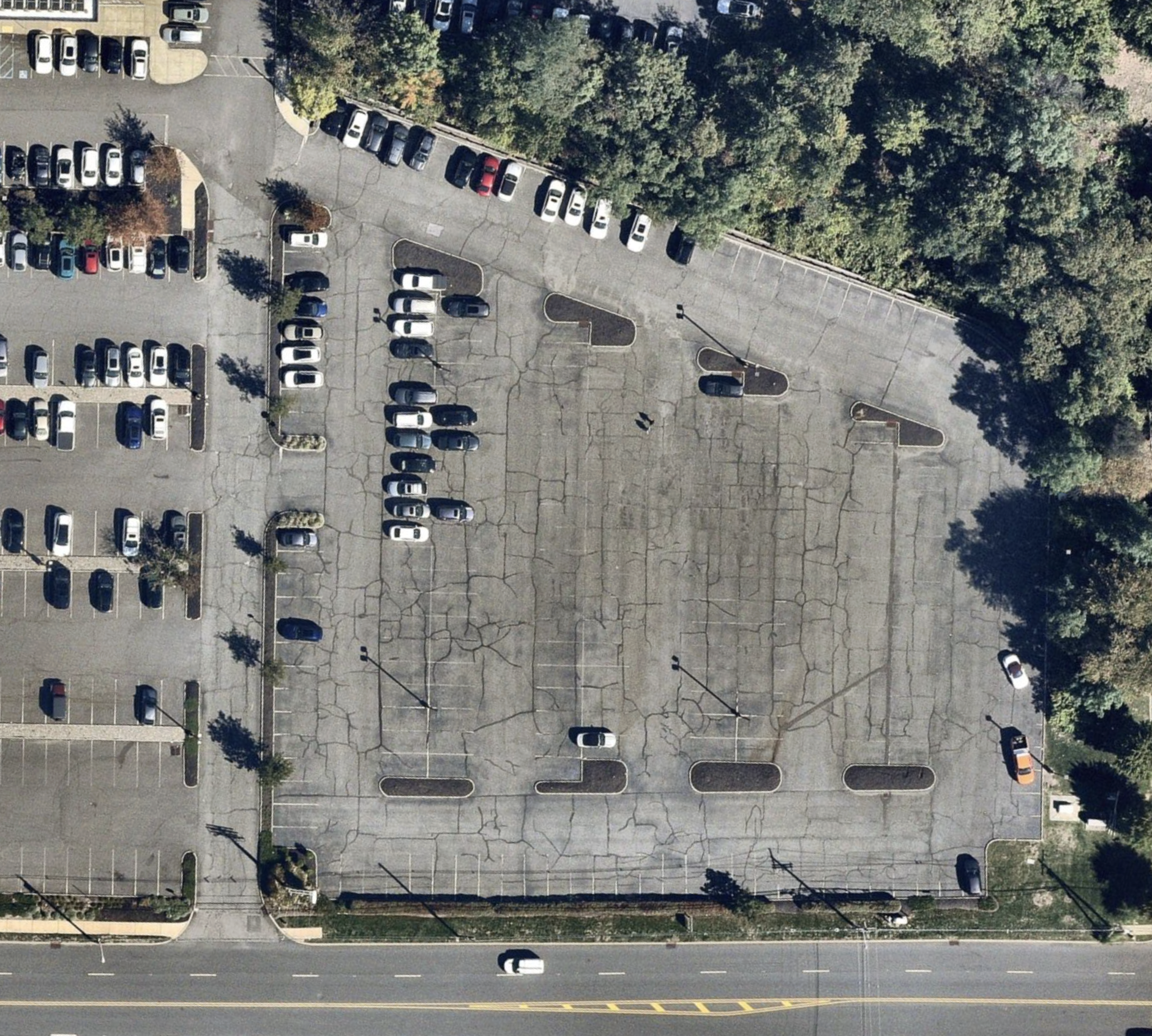
Instead of throwing numbers at you or emailing a quote from behind a desk, let’s do something more helpful. Imagine we’re standing side-by-side in a real 100,000 square foot parking lot somewhere here in New Jersey. We’re not talking price yet. We’re just walking the site like engineers and asking simple questions: Where is water collecting? Where is the base failing? Which areas are structurally sound and worth saving? Are the drains solid? Are slopes ADA compliant? What will last 20 years — and what will fail in two? That’s exactly how we scope every project. Because before you can price paving correctly, you have to understand what the pavement is trying to tell you. So let’s walk the lot together and I’ll show you exactly what we look for — and what most contractors never point out.
Ready?
Let’s dive in. 👊
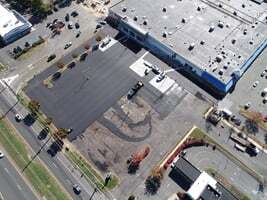 How Much Does Asphalt Paving Alone Cost for 100,000 Sq. Ft.?
(Assuming the asphalt base is in good condition, there are no drainage issues present, and the ADA parking stalls are compliant)
Asphalt Milling & Asphalt Paving Price Range For New Jersey (2026):
$190,000 – $250,000
👉 ($1.90 – $2.50 per sq. ft.)
You will usually get:
- Barricades, traffic control, and work area protection
-
Milling of the asphalt from a depth of 1" - 2.5", depending on grades and water flow, along with sweeping for site clean-up
-
Application of a tack coat for bonding the old asphalt to the new asphalt
-
Installation of new plant hot mix asphalt (NJDOT I-5/9.5 mm) installed at a rate of 2"-2.5" loose and compacted to 1.5" - 2."
-
Service is typically completed after line striping, which can range in cost from $0.05 - $0.10 square foot in addition to the pricing above
-
Jobsite cleanup and final walkthrough to verify punch list items.
That’s the correct process for surface replacement.
And if your lot truly only needs that…
Great — that’s the best-case scenario.
But here’s the part most contractors won’t explain
Milling and paving is only the top layer.
It’s the cosmetic finish.
It’s not the structure.
And after walking thousands of commercial properties across New Jersey, we can tell you honestly:
Very few large parking lots only need paving.
Because nearly every lot has something else going on underneath:
• trapped water
• soft base areas
• alligator cracking
• aging catch basins
• ADA slope issues
• settlement
• drainage problems
And those issues don’t show up in a “price per square foot” bid.
They only show up when someone actually walks the lot and looks, AND has the technical expertise to design a solution.
Let's dig into it deeper 👊
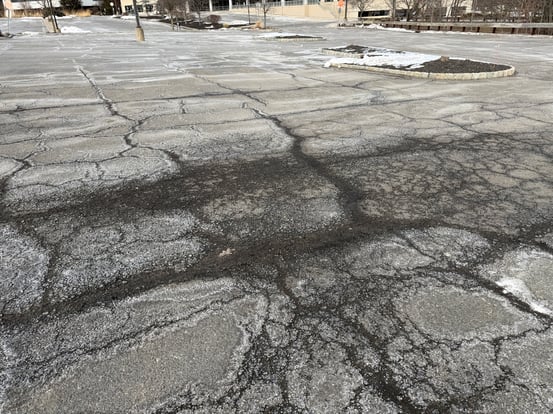 Underground Water Remediation Cost
Underground Water Remediation Price Range:
$60.00 – $80.00 per linear foot
Why Underground Water Remediation Is So Important (And Why Most Paving Jobs Fail Without It).
When we walk a parking lot with a client, the very first thing we look for isn’t cracks.
It isn’t potholes.
It isn’t even the asphalt.
It’s water.
Water — not traffic — is what destroys parking lots.
Every time.
Here’s what most people don’t realize
Asphalt is not waterproof.
It’s water-resistant.
There’s a big difference.
Water slowly works its way through:
• cracks
• joints
• edges
• utility cuts
• old patches
Once it gets underneath, it sits in the base.
And that’s where the real damage begins.
What happens when water gets trapped under pavement?
Especially here in New Jersey, where we deal with clay soils and constant freeze–thaw cycles.
This is the chain reaction we see all the time:
- Water enters the base
- Subgrade softens and loses strength
- Vehicles flex the pavement
- Base starts pumping mud upward
- Asphalt cracks
- Water gets in faster
- Failures accelerate
Now what started as a small moisture issue turns into:
• alligator cracking
• potholes
• settlement
• sinkholes
• premature failure
And suddenly that “brand new paving job” looks terrible in two winters.
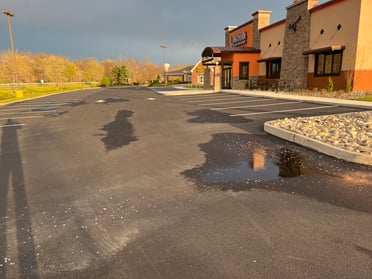 This is why paving over wet areas doesn’t work
Let’s say a contractor simply mills and paves.
The surface looks beautiful.
Fresh black asphalt.
Nice straight lines.
Everything looks perfect.
But underneath?
The water is still there.
So what happens?
The new asphalt flexes over soft spots.
And within 12–24 months:
The cracks come right back.
Not because the paving was bad.
Because the foundation was never fixed.
It’s like putting hardwood floors over a wet basement.
It looks great…
Until it doesn’t.
What to do differently
When we see persistent wet areas, pumping, or soft subgrade, we don’t price paving yet.
Because paving isn’t the solution.
Drainage is.
We typically recommend:
• underdrain systems
• trench drains
• stone backfill
• proper outlets
• regrading low spots
The goal is simple:
Get the water out first. Then pave.
Not the other way around.
💲 Typical NJ Underdrain Pricing
| Service | Cost |
|---|---|
| Underdrain installation | $60 – $80 per linear foot |
A few hundred linear feet of drainage can easily add $15,000–$25,000 to a project.
And here’s the honest truth:
Some contractors avoid bringing this up…
Because it raises the price.
And higher prices lose bids.
But skipping drainage almost guarantees early failure.
So you don’t actually save money.
You just delay the expense.
The simple rule we follow
If water is present…
Paving is cosmetic.
Drainage is structural.
And structural issues always come first.
Bottom line
If you remember one thing from this guide, make it this:
Asphalt doesn’t fail from the top down.
It fails from the bottom up.
Control the water… and your pavement lasts decades.
Ignore the water… and you’ll be paving again soon.
That’s why the very first thing we look for when walking any lot isn’t asphalt.
It’s where the water is going.
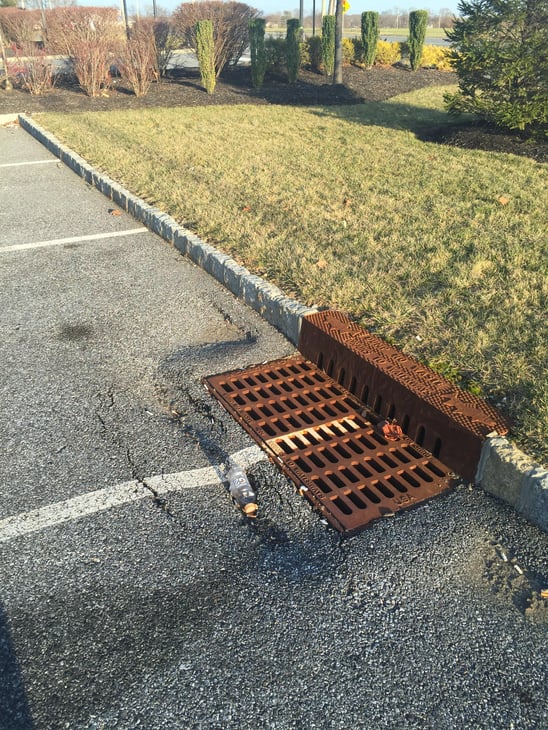 Catch Basin Repair Cost
Why Catch Basin Inspections Should Always Happen Before Milling
Catch Basin Rebuild Costs:
$2,500.00 – $3,500.00 per basin
Here’s something almost no one tells property managers before a paving project starts:
Milling is extremely hard on catch basins.
And if those structures are old or weak…
They usually failduring milling.
Not years later.
Right then and there during construction.
This is exactly how it typically plays out
We’ve seen this hundreds of times.
A contractor starts milling.
The machine vibrates the pavement aggressively.
The ground shakes.
And suddenly:
Crack.
A basin wall collapses.
Bricks fall into the basin from shoving while removing the asphalt around the basin perimter
A frame shifts.
The asphalt around it breaks apart.
Now you’ve got a hole in the middle of your parking lot.
And the contractor walks over and says:
“We found a problem. This will need a change order.”
At that point?
You have zero leverage.
The lot is already torn up.
The schedule is running.
Tenants are affected.
You have to approve it.
Whatever the cost is, which is typically a premium, from what it would have cost if you had done it 2-weeks prior to starting milling, when time was not of the essence.
Why does this happen so often?
Because many catch basins in New Jersey are:
• 20–30+ years old
• brick or block construction
• undermined by water
• cracked from freeze–thaw
• never inspected
They might look fine from the surface.
But structurally?
They’re barely hanging on.
Then milling vibration finishes the job.
Here’s the mistake most paving "bids" make
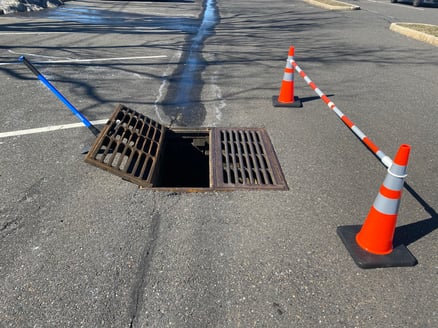 Most contractors price paving like this:
“Mill & pave — done.”
They don’t:
• open the grates
• inspect the structure
• check for undermining
• probe the concrete
• evaluate frame stability
Because if they include basin repairs up front…
Their price goes up.
And they risk losing the bid.
So they don’t mention it.
Until they have to.
Mid-project.
On your dime.
How you should approach it differently
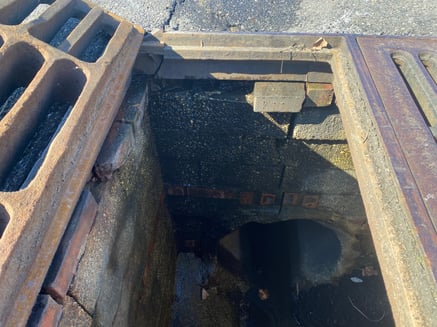 Before we ever schedule milling, we physically inspect every basin.
We:
• open every grate
• check walls and floors
• look for voids and washout
• test frame stability
• identify anything questionable
Then we talk through it with you ahead of time.
Not after demolition.
Because surprises during construction are expensive.
Planning before construction is controlled.
Why this matters financially
Catch basin repairs are not huge numbers compared to paving…
But they feel huge when they show up as unexpected change orders.
💲 Typical NJ Pricing
| Service | Cost |
|---|---|
| Catch basin rebuild | $2,500 – $5,000 each |
If you have 5–6 basins:
$12,500 – $30,000
It’s much easier to plan for that in the budget upfront…
Than to get hit with it mid-project when you can’t say no.
The simple rule we follow
If we’re milling the lot…
We inspect every structure first.
No exceptions.
Because paving around a failing basin is like remodeling a kitchen while ignoring a broken foundation.
It looks nice for a minute.
Then it cracks apart.
Bottom line
Catch basin inspections aren’t “extras.”
They’re part of proper scoping.
And proper scoping is what separates:
Guessing
from
Professional paving.
That’s why we’d rather show you the problems before we start work — not explain them after something breaks.
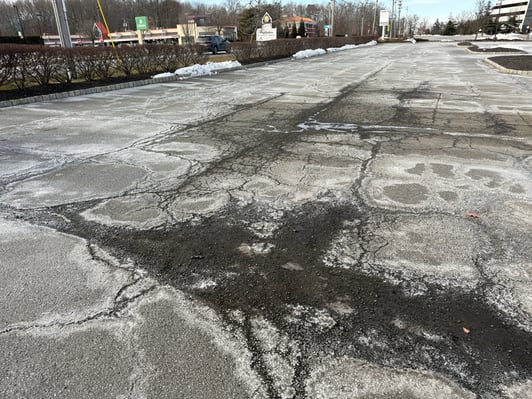 Why Box-Out Repairs Matter (And Why Milling Alone Won’t Fix Base Failure)
Boxout Repair Price Range:
$13.00 - $20.00 per square foot
As we keep walking the lot together, there’s one thing we always look for next.
Not potholes.
Not surface cracks.
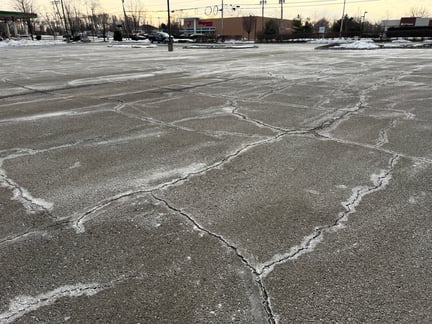
We look for alligator cracking.
That spiderweb, scaly-looking pattern in the asphalt.
Because when we see that?
We already know something important.
The problem isn’t the asphalt.
It’s the foundation underneath it.
What alligator cracking really means
A lot of people assume those cracks just mean:
“The pavement is old.”
But that’s not what it means at all.
Alligator cracking is structural failure.
It tells us:
• the base is soft
• the subgrade has lost strength
• water has weakened the foundation
• the pavement is flexing under traffic
In other words…
The ground underneath can’t support the load anymore.
And once that happens, no amount of new asphalt on top will fix it.
Here’s where most paving jobs go wrong
This is something almost every property manager has experienced at least once.
A contractor says:
“We’ll just mill and pave the lot.”
It looks great on day one.
Nice, smooth, jet black asphalt.
Then one winter later?
Those same cracks come right back.
Same spots.
Same pattern.
Why?
Because milling only removes the top 2 inches.
It doesn’t fix what’s broken below.
So you’re basically putting a fresh coat of paint over a cracked wall.
It hides the problem.
It doesn’t solve it.
The correct fix is called a box-out repair
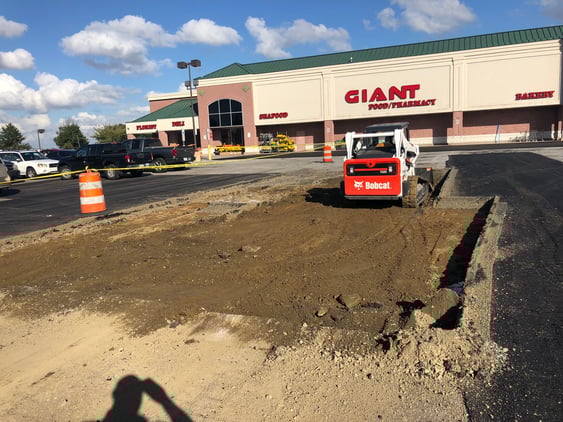 When we identify structural failure, we don’t just resurface.
We rebuild.
That means:
• saw cut the damaged area
• remove existing asphalt
• remove 6–12 inches of failed subgrade
• install soil stabilization fabric
• add recycled concrete aggregate base
• compact properly
• install 4" binder asphalt
• then pave the surface
Now you’ve rebuilt the foundation — not just the top.
That’s the difference between:
A patch that lasts 1–2 years
and
A repair that lasts 15–20+ years
Why many contractors skip this conversation
Because box-outs increase the price.
And when the industry competes on “lowest bid,” anything that raises the number risks losing the job.
So some contractors simply don’t bring it up.
They price everything as mill & pave.
Hope for the best.
And deal with callbacks later.
But that’s not a strategy.
That’s gambling.
💲 Typical NJ Box-Out Pricing
| Service | Cost |
|---|---|
| Full-depth box-out repair | $13 – $20 per square foot |
So if we find:
2,000 SF of failure → $26,000 – $40,000
3,000 SF → $39,000 – $60,000
It’s not cheap.
But it’s far cheaper than paving twice.
How we explain it to clients
We usually say:
“If we don’t fix this now, you’ll be looking at these same cracks through your brand-new pavement next winter.”
Once you see it that way, it makes sense.
Because you’re not paying for asphalt.
You’re paying for lifespan.
Bottom line
Milling fixes the surface.
Box-outs fix the structure.
And structure always wins.
If the base is bad, nothing above it matters.
That’s why we’d rather show you exactly where these areas are while walking the lot — instead of pretending everything is fine and letting the pavement fail later.
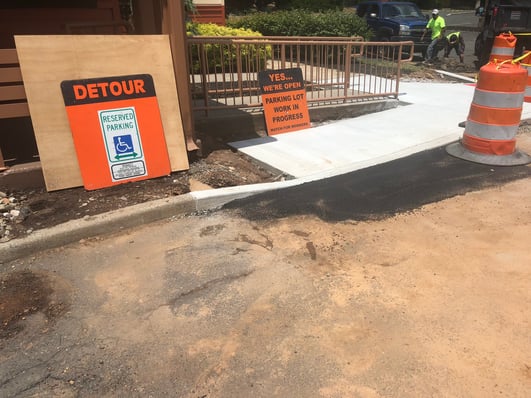 Why ADA Compliance Should Be Addressed Before You Pave (Not After)
ADA Upgrade Price Range:
$19,000.00 t0 $13,000 per ADA parking stall
As we finish walking the lot, there’s one more thing we always check before talking about paving.
And it surprises people every time.
It’s not asphalt thickness.
It’s not cracks.
It’s ADA compliance.
Because paving isn’t just about making the lot look good.
It’s also about making sure the property is safe, accessible, and legally compliant.
And this is where a lot of older parking lots quietly fail.
Here’s what we see all the time
Especially across older properties in New Jersey:
• slopes that are too steep
• uneven transitions to sidewalks
• low or faded signage
• improper striping layouts
• settled asphalt around stalls
• patched areas creating trip hazards
From a distance?
It looks fine.
But when we put a digital level on it…
It’s out of tolerance.
And technically?
Non-compliant.
Why this matters more than most people realize
Potholes are annoying.
Cracks are cosmetic.
But ADA issues?
Those can become legal problems.
If someone trips, falls, or files a complaint, the question isn’t:
“Did it look okay?”
It’s:
“Was it compliant?”
That’s a very different conversation.
And unfortunately, we’ve seen property owners forced into expensive corrections later simply because no one addressed it during paving.
Here’s the mistake many contractors make
A lot of paving contractors treat ADA like striping.
They’ll say:
“Don’t worry — we’ll paint the handicap symbols back.”
But paint doesn’t fix slopes.
Paint doesn’t fix settlement.
Paint doesn’t fix accessibility.
If the asphalt underneath isn’t right, the striping doesn’t matter.
And here’s something most people don’t know:
Asphalt is hard to fine-tune for precise slopes.
Even if we shape it perfectly…
The vibratory rollers used during paving can slightly shift grades.
Sometimes just enough to push it out of compliance.
Concrete, on the other hand?
Holds shape exactly.
 What we typically recommend instead
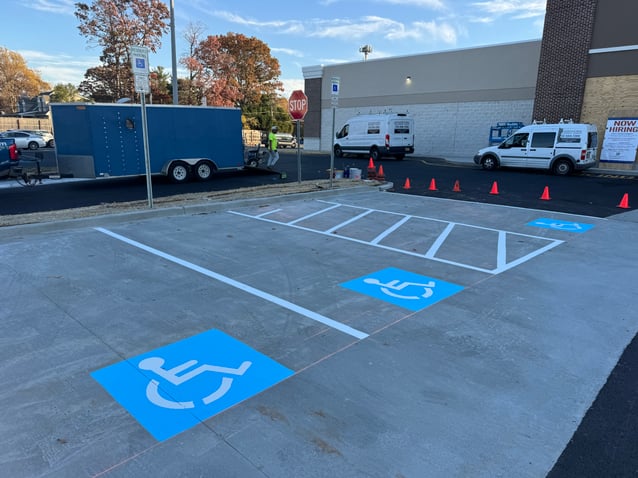
For dedicated ADA areas, we often suggest:
• concrete parking stalls
• concrete access aisles
• concrete paths of travel
• proper transitions to sidewalks
• compliant signage
• high-intensity reflective markers
• protected bollards
Concrete gives you:
• precise slopes
• long-term durability
• minimal settlement
• easier inspections
• lower long-term maintenance
In other words…
Set it once and forget it.
💲 Typical NJ ADA Upgrade Pricing
| Service | Cost |
|---|---|
| Concrete ADA stall conversion (including signage & protection) | $9,000 – $13,000 per stall |
So if you have 4 stalls:
$36,000 – $52,000
It’s not a small number.
But compared to:
• lawsuits
• rework
• tearing up brand-new asphalt later
It’s usually the smarter move.
How we explain it to clients
We usually say:
“If we’re already mobilized, already paving, already improving the lot… this is the time to fix ADA permanently.”
Because doing it later means cutting into fresh asphalt you just paid for.
And nobody wants that.
Bottom line
Paving makes your lot look new.
ADA compliance makes your lot safe and defensible.
Both matter.
But only one protects you legally.
That’s why we always evaluate accessibility before we pave — not after the striping truck leaves.
Why Asphalt Prices Have Been So Volatile in 2026
There is something important every New Jersey property owner and property manager needs to understand before relying on a paving budget:
Asphalt pricing has been unusually volatile in 2026.
Hot-mix asphalt is not a product with a fixed annual price. Its cost is affected by several moving parts:
- liquid asphalt cement, which is derived from petroleum
- diesel fuel used by asphalt plants, trucks and construction equipment
- aggregates and recycled asphalt availability
- trucking and hauling distance
- plant production schedules and regional demand
- refinery disruptions and broader energy-market conditions
And in 2026, several of those costs have been moving at the same time.
According to the U.S. Bureau of Labor Statistics asphalt commodity index, the asphalt index increased from 212.439 in March 2026 to 360.758 in July 2026.
That is an increase of approximately:
70% in only four months.
That does not mean the delivered price of every ton of hot-mix asphalt increased by 70%. The index tracks asphalt as a petroleum-based commodity, not the final price charged by a New Jersey asphalt plant. But it clearly demonstrates how quickly one of the most important ingredients in asphalt paving can change.
Fuel has also created significant pressure.
As of August 24, 2026, Central Atlantic diesel averaged $5.84 per gallon, approximately $1.92 higher than one year earlier, according to the U.S. Energy Information Administration.
Why does diesel matter so much?
Because fuel touches nearly every part of a paving project:
- transporting aggregate and liquid asphalt to the plant
- heating and producing the asphalt mixture
- hauling asphalt from the plant to your property
- operating milling machines, pavers, rollers, skid steers and sweepers
- removing and disposing of milled asphalt
- mobilizing crews and equipment to the jobsite
So when petroleum and diesel prices move, the impact extends far beyond the asphalt material itself.
What This Means on a 100,000 Sq. Ft. Parking Lot
A typical 100,000-square-foot parking lot paved approximately 2 inches thick may require roughly 1,200–1,300 tons of hot-mix asphalt, depending on the mix design, compacted thickness and actual field conditions.
That means every $10-per-ton change in asphalt pricing can change the material portion of the project by approximately:
$12,000–$13,000.
And that is before accounting for changes in fuel, trucking, labor, disposal and equipment costs.
This is why two legitimate paving proposals prepared several months apart can be significantly different—even when the scope of work appears identical.
It is also why a proposal prepared early in the year may no longer reflect the contractor’s actual costs when the project is finally approved months later.
How Property Managers Should Protect Their Budgets
When budgeting a major paving project in a volatile market, we recommend asking:
- How long is the proposal valid?
Asphalt suppliers may change pricing with relatively little notice, so contractors cannot always hold material pricing indefinitely. - Does the proposal contain a material-escalation clause?
If it does, ask exactly what triggers the adjustment and how it will be documented. - Is the project scheduled—or merely approved?
A signed proposal does not necessarily reserve asphalt, trucking or plant capacity unless a construction date has been established. - Does the budget include a reasonable contingency?
Large capital projects should have room for material movement and legitimate unforeseen site conditions. - Can the contractor document a price increase?
Any requested adjustment should be supported by updated plant pricing, supplier notices or another identifiable cost change—not an unexplained increase.
The Bottom Line
The $190,000–$250,000 milling-and-paving range discussed in this guide remains a useful 2026 planning range for a 100,000-square-foot New Jersey parking lot with a sound base and straightforward conditions.
But it should not be treated as a guaranteed price that remains unchanged throughout the year.
In a volatile asphalt market, timing matters.
A budget prepared in January, a proposal issued in April and a project scheduled in September may reflect three very different material and fuel markets.
That does not mean property managers should rush into a paving decision.
It means they should:
- develop the correct scope early
- obtain current pricing
- understand how long that pricing is valid
- confirm how escalation will be handled
- schedule the work once the budget and scope are approved
The goal is not simply to get the lowest number.
The goal is to receive a clear, defensible price for the correct scope—without being surprised after the project has already started.
Why We’d Rather Walk the Lot With You Than Just Email You a Quote
Let me explain something that might sound a little unusual coming from a paving contractor.
If you call FixAsphalt.com and ask:
“Can you just send me a number for paving?”
There’s a good chance we’ll say:
“Before we price anything… can we walk the lot with you first?”
Not because we’re trying to make the process longer.
And definitely not because we’re trying to sell you something.
It’s actually the opposite.
It’s because we want you to be fully informed before you buy anything.
Here’s the truth most contractors won’t say out loud
About 90% of paving contractors in New Jersey bid work like this:
Measure the lot
Multiply by a unit price
Send a proposal
Done.
No drainage discussion.
No base inspection.
No basin checks.
No ADA review.
No explanation.
Just a number.
And on the surface, that feels efficient.
Until two winters later… when the lot starts failing again.
Why does this happen?
Not because those contractors are bad people.
It’s because the industry has been trained to compete on one thing:
Lowest price wins.
So if a contractor takes the time to:
• talk about underdrains
• explain base failures
• recommend box-out repairs
• rebuild basins
• fix ADA compliance
Their number goes up.
They lose the job.
So most simply don’t bring it up.
Not because it’s unnecessary…
Because it’s inconvenient to the sale.
But here’s how we look at it
We don’t see paving as a “quote.”
We see it as:
Helping someone make a six-figure capital decision correctly.
If you’re about to spend $200,000… $300,000… sometimes $500,000+…
Wouldn’t you want to know:
• what’s actually wrong
• what can be saved
• what must be fixed
• what’s optional
• what happens if you skip something
• and how long it should realistically last
That’s not selling.
That’s teaching.
And that’s exactly how we approach it.
So when we say “let’s walk the lot together”…
Here’s what we really mean
We want you standing next to us while we point things out.
“See this area? Water is trapped underneath.”
“This cracking means the base failed.”
“These basins are about to collapse during milling.”
“This slope won’t pass ADA.”
Because once you see it with your own eyes…
You’ll never look at paving as “price per square foot” again.
You’ll start looking at it like:
“What’s the right way to fix this so I don’t deal with it again for 20 years?”
That’s a totally different buying mindset.
Who this article is actually for
This guide isn’t really written for professional procurement teams who buy paving every day and just want the lowest number.
They already have systems and preferred vendors.
That’s fine.
This is for people like:
• a commercial property manager frustrated that past jobs didn’t last
• a facility manager responsible for one large site
• a church board member trying to steward donations wisely
• a nonprofit making a once-every-20-years decision
• a commercial property owner who simply wants it done right the first time
People who may not live in the paving world…
But want to understand it before spending serious money.
If that’s you — this guide is exactly why we wrote it.
And if you’re just shopping for the cheapest number…
We’re probably not your contractor.
And that’s okay.
There are plenty of companies who will gladly email you a low price.
We’d rather be the company that helps you make the smartest decision.
Even if that means you don’t hire us.
Because educated buyers make better long-term choices.
And that’s how trust is built.
Our philosophy in one sentence
Before we ever ask for your business…
We want you to understand your parking lot better than anyone else.
That’s how you protect your asphalt.
And that’s how we earn the right to work with you.
🟢 Would you like to work with us?
Schedule an On-Site Assessment
If you’ve made it this far, you probably noticed something.
This isn’t a typical “paving contractor” article.
We didn’t throw out a cheap number.
We didn’t push a quick quote.
We didn’t promise to be the lowest bidder.
Instead, we walked a real parking lot together.
We showed you:
• what actually fails
• what most contractors skip
• what it really costs to do it right
• and how to protect your asphalt for the next 15–25 years
Because that’s how we believe paving decisions should be made — informed, not rushed.
Here’s how we work
Before we ever talk price, we prefer to meet you on-site.
Not to sell you.
To educate you.
We’ll walk the property together and point things out in plain English:
“Here’s where water is getting trapped.”
“This section needs full-depth repair.”
“These basins should be rebuilt before milling.”
“Your ADA slopes are close, but not compliant.”
“This area is solid — you don’t need to touch it.”
Sometimes we recommend less work than you expected.
Sometimes more.
But it’s always honest.
Because our goal isn’t to win the job today.
It’s to make sure the pavement lasts so you don’t have to think about it again for decades.
Who we’re a great fit for
We tend to work best with:
• commercial property managers
• facility managers
• churches and schools
• HOAs and associations
• owners responsible for long-term assets
• anyone tired of paving jobs that don’t last
If you’re looking for the cheapest number only, we’re probably not the right fit.
But if you want clarity, transparency, and a plan that makes sense long-term…
We’d love to help.
Schedule Your On-Site Assessment
If your parking lot is 25,000–250,000+ sq. ft. anywhere in New Jersey, we’ll come out, walk it with you, and give you a clear game plan.
No pressure.
No guesswork.
No “mystery change orders.”
Just straight answers.
📞 Call: 1-877-349-2774
Or visit FixAsphalt.com to request an assessment
Let’s walk your lot together and figure out what it really needs.



Leave a Comment