



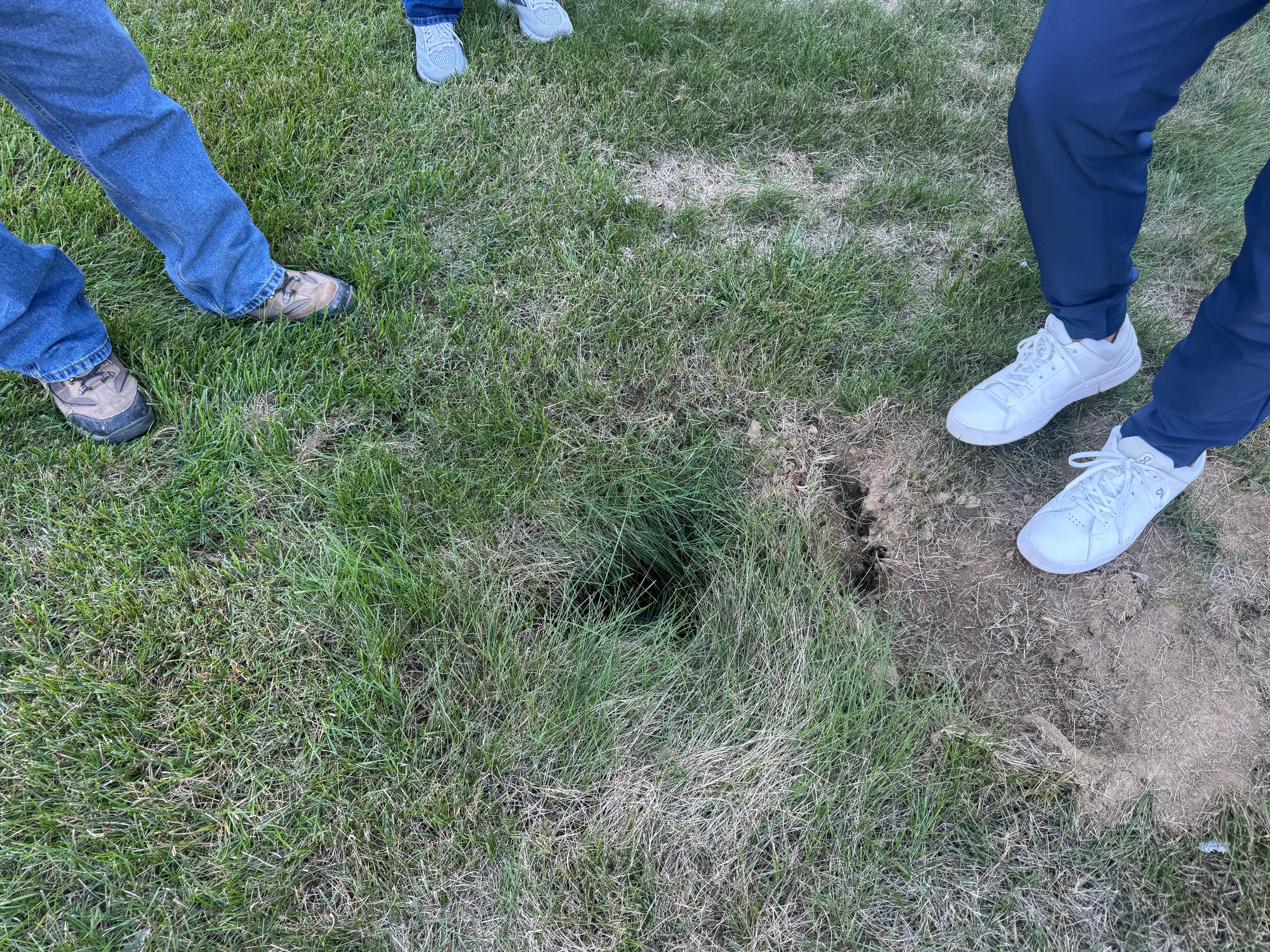
Sinkhole at a Cranbury NJ Industrial Facility: What Really Caused This Failure? (2026 Guide)
Today we responded to a sinkhole that formed at an industrial warehouse in Cranbury, NJ, part of the busy 8A industrial corridor known for heavy tractor-trailer traffic and massive stormwater loads.
At first, the facility manager feared the worst:
“I think the 18-inch concrete pipe for the roof drains has a hole inside it.”
Because that pipe handles all the roof drainage, a failure would be severe — potentially impacting the building structure itself.
 Step 1 — Utility Markout
Before touching anything, we requested a full utility markout to ensure no electrical, telecom, gas, or private utilities were in the excavation zone.
Step 2 — Excavation Down to the Pipe
We carefully opened the sinkhole and traced the void down through the pavement and stone base.
When we exposed the 18” reinforced concrete pipe, it was in perfect shape — no cracks, no separation, no joint movement.
Step 3 — The Real Cause: Failed Underdrain System
The sinkhole was caused by something most facility managers never think about:
-
A piece of underdrain had been installed in the subbase
-
The soil separation fabric had deteriorated
-
Soil washed down into the ¾” clean stone
-
Voids formed
-
The pavement above eventually collapsed
This type of failure is incredibly common in older industrial parks across Cranbury, Dayton, Monroe, South Brunswick, and Robbinsville because:
-
Heavy truck traffic stresses the subgrade
-
Large roof drainage systems expel tremendous water volume
-
Many properties were built quickly during expansion cycles
-
Underdrain fabrics from the early 2000s/2010s degrade over time
 Why This Is a Serious Problem
Even a small sinkhole can lead to:
-
Tractor trailer tire blowouts
-
Yard logistics disruptions
-
OSHA trip hazards
-
Water infiltration that expands the void
-
Structural settlement if water migrates toward footings
How FixAsphalt.com Corrects This
Our repair process includes:
-
Removing all compromised stone
-
Installing new geotextile fabric
-
Rebuilding the subbase with compacted DGA
-
Reinstalling the underdrain correctly
-
Re-paving the surface course
Our Step-By-Step Process for Identifying What Actually Caused the Sinkhole
When a sinkhole forms on an industrial property, guessing is the most expensive mistake a facility manager can make. That’s why we use a structured, forensic-style approach to determine the actual cause before any repairs begin. First, we initiate a full utility markout to protect underground services. Once the site is cleared, we excavate a controlled area to expose the layers beneath the pavement — the asphalt, the stone base, the geotextile fabric, any underdrain components, and finally the storm pipe itself if one is present. By examining each layer in sequence, we can immediately see whether the failure came from soil migrating through deteriorated fabric, voids forming in clean stone, a separated pipe joint, improper backfill, or long-term water infiltration. This systematic process eliminates assumptions, prevents unnecessary pipe replacement, and ensures the repair is engineered to address the true root cause — not just the visible surface damage.
Why We Are Publishing This: Education for NJ Industrial Facility Managers
There is almost no online education for logistics property managers about:
-
How underdrains actually work
-
Why soil migration happens
-
What causes sinkholes beneath asphalt
-
How to differentiate pipe failure from subbase failure
-
How to avoid unnecessary excavation or camera work
Most contractors don’t understand drainage systems — and that leads to bad advice, misdiagnosis, and wasted money.
This article and video exist to provide real-world transparency for the 8A corridor.
Serving the Cranbury / Dayton / 8A Industrial Market
If your warehouse, trucking yard, or industrial property has:
-
Sinkholes
-
Sinkholes around catch basins
-
Ponding areas
-
Drainage failures
You can upload photos for a quick assessment.
📍 FixAsphalt.com — Industrial & Commercial Pavement Experts
Serving: Cranbury, Dayton, South Brunswick, Monroe, Robbinsville, Hamilton, Hightstown, East Windsor & the entire NJ 8A corridor. In addition, we service all of NJ for sinkhole diagnosis and repairs.
Sinkholes in the NJ Industrial/Logistics Corridor (Cranbury–Dayton–Exit 8A): Q&A
Why do sinkholes form in industrial parking lots in Cranbury & Dayton NJ?
Most sinkholes in the 8A industrial corridor are caused by:
-
Underdrain failures (deteriorated geotextile fabric → soil migration)
-
Voids in subgrade from poor compaction or water intrusion
-
Aging storm drainage systems (pipes from the 1980s–2000s beginning to separate)
-
Roof drain discharge volumes that overload the subbase
-
Heavy tractor-trailer traffic stressing already weakened soil
-
Construction shortcuts taken during boom years of warehouse development
This region has tens of millions of square feet of logistics buildings built fast — meaning many drainage failures are starting to show up now.
Do sinkholes always mean a collapsed storm pipe?
No.
In fact, most sinkholes are not caused by broken pipes.
Common non-pipe causes:
-
Failed underdrains
-
Geotextile fabric deterioration
-
Washed-out subbase
-
Old trenches backfilled with clean stone instead of DGA
-
Long-term roof runoff in one concentrated area
- Buried construction debris
Pipe failures do occur, but they’re not the #1 cause.
How do you determine what caused the sinkhole?
FixAsphalt.com uses a multi-step diagnostic:
-
Utility markout (811 + private utilities)
-
Small controlled excavation
-
Inspection of subbase, stone, geotextile fabric, and underdrain
-
Inspection of concrete/HDPE pipes for signs of mud being carried through the pipe
-
Moisture tracing and soil compaction checks
Most “mystery sinkholes” reveal themselves within the first 12–24 inches.
Can I simply fill the sinkhole with asphalt or stone?
No — and this is the #1 reason failures reoccur.
If you do not:
-
Identify the source of the void and repair it
-
Backfill properly
-
Restore drainage
…the sinkhole will return, often within weeks or months.
How long does a proper sinkhole repair take?
Most industrial sinkholes take:
-
1 day for diagnosis and excavation
-
1 day for repair
-
1 day for asphalt, concrete or landscape restoration
Complex issues where pipes need to be replaced may require 3–5 days, depending on inspections, pipe replacement, and compaction requirements.
What if the sinkhole is near a building or loading dock?
Sinkholes near structures require more caution, including:
-
Camera inspection of pipes
-
Verifying settlement has not traveled under footings
-
Checking that roof drain lines haven’t separated
These locations may require engineered backfill, grouting or controlled-density fill.
Can grouting be used to repair sinkholes in NJ?
Yes — but only in certain situations.
Grouting is used when:
-
The void extends deeper than safe excavation allows
-
There are cavities beneath a slab or behind walls
-
Soil loss needs to be halted quickly
In logistics yards, grout is often used under:
-
Aprons
-
Dock slabs
-
Trailer staging areas
How do you prevent sinkholes in industrial parking lots?
Prevention includes:
-
Ensuring underdrains have intact fabric
-
Yearly drainage inspections
-
Keeping roof drains free of debris
-
Re-routing concentrated roof runoff
-
Sealing cracks to reduce water infiltration
-
Pavement management planning every 2–3 years
💰 NJ Industrial Sinkhole Repair Cost Guide (2026)
(Based on typical pricing for Cranbury, Dayton, Monroe, South Brunswick, Robbinsville, Hamilton & the greater Exit 8A industrial corridor)
🔶 1. Minimum Mobilization Cost
Most reputable commercial asphalt contractors require a minimum mobilization charge due to:
-
Bringing equipment to a secure industrial yard
-
Utility markout coordination
-
Crew time
-
Excavator/skidsteer transport
-
Expertise of the individual diagnosing the problem
Typical Mobilization Range:
$3,500 – $7,500
👉 If the sinkhole repair is small and straightforward, this mobilization fee often covers the entire repair.
Examples of repairs often covered under mobilization:
-
Small voids (1–2 ft deep)
-
Surface-level soil migration
-
Minor underdrain repairs
-
Minor pipe repairs
🔶 2. Pipe Replacement Costs (If the Pipe Is the Issue)
If the sinkhole is caused by:
-
A broken storm pipe
-
A separated joint
-
A collapsed section
-
Root intrusion
-
Joint displacement
…the repair cost increases significantly if the pipe can not be repaired/patched and has to be replaced.
Typical Range:
$2,500 – $25,000+
(depending on pipe size, depth, access, and replacement length)
Factors influencing cost:
-
8", 12", 15", 18", or 24"+ pipe
-
Concrete vs HDPE
-
Depth (3 ft vs 10 ft+)
-
Working near building foundations
-
Heavy truck traffic zones
-
Need for trench boxes or shoring
🔶 3. Grouting Costs (Void Injection)
If excavation is unsafe or voids extend too deep, grout is used to fill the cavity.
Typical Grouting Range:
$2,500 – $5,000
(Depending on cubic yards required)
Used especially when:
-
The sinkhole is under a dock approach
-
There are voids under concrete slabs
-
Subgrade migration extends beyond the visible collapse
🔶 4. Rebuilding the Subbase (After Fixing the Source)
Typical subbase reconstruction costs depend on:
-
Depth of excavation
-
Soil removal
-
Bringing in new aggregate
-
Installing new fabric
-
Compacting in lifts
This is often included within mobilization unless the excavation is large.
🔶 5. Surface Restoration Costs
After repairing the subbase or pipe, you must restore surface materials.
Asphalt Restoration
$8–$15 per sq ft
(Depending on depth and location)
Concrete Sidewalk Replacement
$12–$20 per sq ft
Concrete Aprons / Loading Dock Slabs
$18–$28 per sq ft
Landscaping / Grading
$500–$3,000
(Topsoil, seed, grading restoration)
Curb Repair
$85–$125 per linear foot
Often clients forget to budget for these post-repair restorations—but they are critical to leaving the site safe and usable.
🔍 Summary Table
| Repair Category | Typical Cost Range | Notes |
|---|---|---|
| Mobilization | $3,500–$7,500 | Covers simple sinkhole repairs |
| Pipe Replacement | $2,500–$25,000+ | Depends on material, size, depth, access |
| Grouting (Void Injection) | $2,500–$5,000 | Used when voids too deep or under concrete slabs |
| Subbase Rebuild | Included or $1,500–$6,500 | Depends on excavation size |
| Asphalt Restoration | $8–$15/sq ft | Deeper repairs cost more |
| Concrete Restoration | $12–$28/sq ft | Depends on thickness & load rating |
| Landscaping/Topsoil/Seed | $500–$3,000 | Final grading & restoration |
| Curb/Gutter Repair | $85–$125/ft | Common on truck aprons |



Leave a Comment