



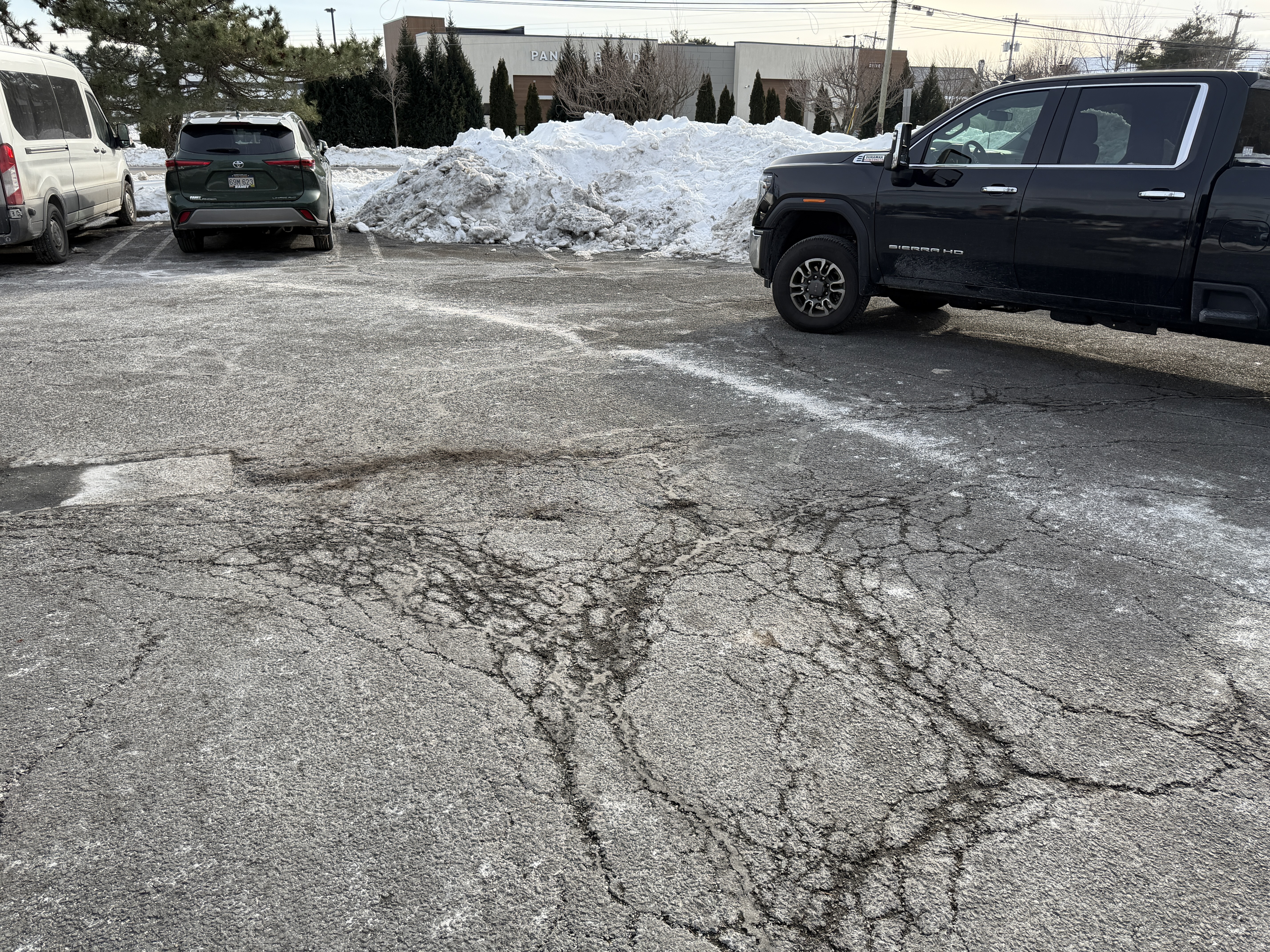
❄️ Snow Doesn’t Damage Asphalt in New Jersey — Freeze–Thaw Cycles Do (2026 Guide for Property Owners)
What commercial property managers need to know before blaming winter storms
If you manage a parking lot in New Jersey, you’ve probably heard this a hundred times:
“The snow destroyed our asphalt this winter.”
But here’s the truth most contractors won’t explain clearly:
👉 Snow itself does NOT damage asphalt.
👉 Freeze–thaw cycles are what actually destroy it.
And New Jersey happens to be one of the worst climates in the country for those.
Quick Answer
Does snow damage asphalt?
No. Snow alone does not harm asphalt.
What actually causes potholes and cracks?
Water penetration + freeze–thaw expansion.
How many freeze–thaw cycles does New Jersey get?
Typically 55–75+ cycles per year, depending on the winter and what part of New Jersey your property is in. Higher elevations experience more while lower elevations closer to the coast receive less.
Why does that matter?
Each cycle increases trapped water by ~9%, slowly breaking down the pavement from the inside.
Let’s break it down simply
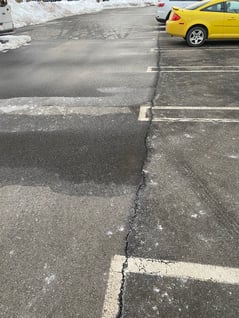
Most people picture snow like this:
❌ Snow falls → asphalt cracks
But what really happens is:
✅ Snow melts → water enters cracks
✅ Temperature drops below 32°F → water freezes
✅ Ice expands → asphalt pushes apart
✅ Repeats 60+ times → pavement fails
It’s basically death by 1,000 tiny expansions.
Why New Jersey Is Especially Brutal on Asphalt
New Jersey winters hover around freezing constantly.
Not cold enough to stay frozen.
Not warm enough to stay dry.
That’s the worst possible combo.
Typical winter pattern:
- Day: 38–45°F (melts snow)
- Night: 20–28°F (refreezes)
- Repeat… over and over
Each swing = 1 freeze–thaw cycle
Annual estimate for NJ:
- 55–75 cycles average
- Some years: 80+
Compare that to:
- Florida → near zero
- Carolinas → 10–20
- NJ/PA/NY → pavement punishment zone
The Science (In Plain English)
When water freezes:
It expands about 9% in volume.
Inside your asphalt, that expansion acts like a tiny hydraulic jack.
Do that 60 times?
Now you’ve got:
- Cracks widening
- Edges raveling
- Base loosening
- Potholes forming
By spring, it looks like the snow caused it…
…but the damage was happening under the surface all winter long.
Why This Matters for Property Managers
This misunderstanding leads to the wrong decisions:
What most people do
❌ Wait until spring
❌ Patch potholes only
❌ Ignore cracks
❌ Repeat every year
What smart owners do
✅ Seal cracks before winter
✅ Keep water out
✅ Sealcoat aging asphalt
✅ Fix weak spots early
✅ Budget proactively
Because once water gets underneath?
It’s game over.
Real-World Example We See All the Time
We see this constantly at commercial properties:
October:
Hairline cracks — easy $2–3K repair
March:
Same area — potholes + base failure → $15–30K repair
Same asphalt.
Same winter.
Just ignored.
The Big Myth Contractors Don’t Explain
Some companies almost like the myth:
“Winter wrecked it — you need paving.”
But the truth is:
Most lots don’t need replacement.
They need:
- Crack sealing
- Infrared repairs
- Preventative maintenance
- Water management
Maintenance extends life from 10 years → 20–25+ years
That’s not an expense.
That’s asset protection.
How We Approach It at FixAsphalt
Instead of just “bidding work,” we help owners understand:
- What actually failed
- Why it failed
- What can be saved
- What truly needs replacement
- How to prevent next winter’s damage
Because education first → trust second → work third.
(Not the other way around.)
Free Winter Damage Assessment (No Pressure)
If you’re in NJ and your lot looks rough after winter:
We’ll:
✅ Review photos or drone shots
✅ Identify freeze–thaw damage vs normal wear
✅ Prioritize repairs
✅ Give budget ranges
✅ Tell you honestly if you don’t need anything
No scare tactics. No “replace everything.”
Just straight answers.
👉 Call: 1-877-349-2774
👉 Or request an assessment at FixAsphalt.com
Bottom Line
Snow doesn’t ruin asphalt.
Water + freeze–thaw cycles do.
Control the water → control the damage → double the lifespan.
That’s how smart property owners win in New Jersey.



Leave a Comment