



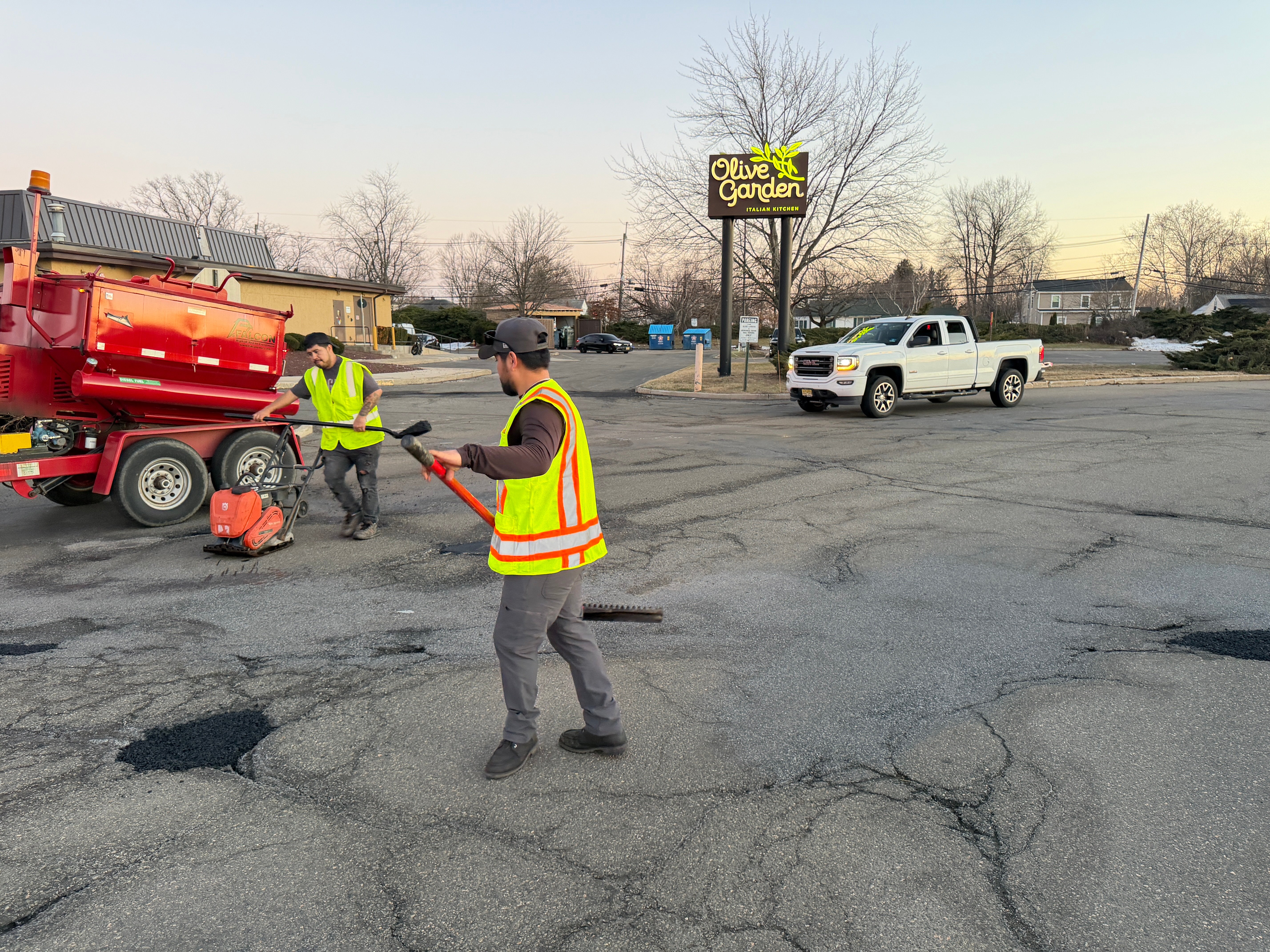
Emergency Pothole Repair Cost Guide for Commercial Parking Lots (NJ, Eastern PA & Delaware)
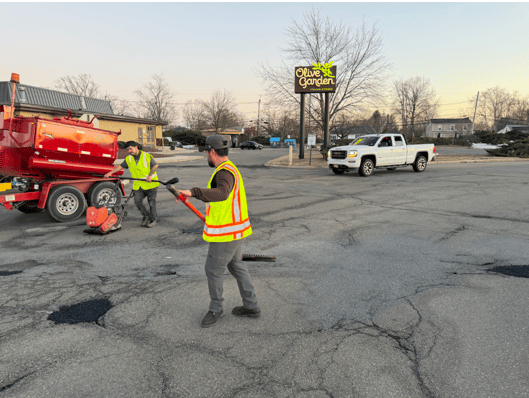
Emergency Pothole Repair Costs in NJ, Eastern PA & Delaware (Quick Answer)
Emergency pothole repair for commercial parking lots in New Jersey, Eastern Pennsylvania, and Delaware typically costs between $2,500 and $20,000+, depending on the number of potholes, severity of pavement failure, repair method used, and whether work must be completed overnight.
Infrared asphalt repairs generally provide a longer-lasting solution and are often packaged as repair programs starting around $3,000 – $5,000+, while traditional throw-and-patch or saw-cut repairs may range from $4,000 – $10,000+ for larger emergency stabilization projects.
Night work or urgent mobilization can increase costs due to labor premiums, asphalt plant coordination, traffic control requirements, and safety considerations. However, completing repairs overnight allows patches to fully harden before traffic resumes, helping prevent premature failure.
Facility managers should address potholes quickly to reduce liability risks, prevent further pavement deterioration, and delay expensive milling and paving projects.
If you manage a commercial property in New Jersey, Eastern Pennsylvania, or Delaware, potholes are not just a routine maintenance item you can push to next quarter — they are an urgent safety and liability risk that directly impacts tenants, customers, and your operating budget.
After harsh winters like 2025–2026, repeated freeze–thaw cycles, heavy truck traffic from deliveries, snowplow damage, and aging pavement conditions, commercial parking lots can deteriorate far more quickly than most budgets anticipate. What may start as a small surface defect in January can evolve into a large, vehicle-damaging pothole or base failure by March if it is not addressed promptly.
Facility managers, asset managers, and property owners are often forced to make fast decisions about emergency pothole repairs — sometimes in response to a tenant complaint, an injury report, or a vehicle damage claim. Those decisions frequently have to be made without clear guidance on:
- What a realistic emergency repair program should cost
- Which repair methods actually perform well in our Mid-Atlantic climate
- How long different repair options can be expected to last
- How to prioritize limited budget across multiple properties or large parking fields
- How to document corrective action for insurance and risk management purposes
Under pressure, it is common to authorize “whatever is quickest” just to get a hazard taped off or filled, only to discover later that the repair failed within a season or did not meaningfully reduce liability exposure.
This guide is designed to give you practical, field-tested clarity before you place that work order. It explains:
- What emergency pothole repairs typically cost in 2026 for commercial parking lots in NJ, Eastern PA, and Delaware
- How different repair methods compare — including infrared asphalt repair and traditional throw-and-patch — in terms of performance, disruption, and lifecycle cost
- How to choose the right approach based on the condition of your pavement, traffic patterns, and risk profile
- How to reduce trip-and-fall and vehicle damage risk while strategically extending pavement life and deferring major capital projects like full mill-and-overlay or reconstruction
With the right information, emergency pothole repairs become more than a reactive expense — they become a targeted risk-management and asset-preservation tool for your portfolio.
Why Emergency Pothole Repairs Cannot Wait
Potholes can rapidly expand once water penetrates the pavement base. In high-traffic commercial environments such as shopping centers, warehouses, office parks, and medical facilities, damage can worsen within days.
Delaying repairs can lead to:
- Trip and fall claims
- Vehicle damage complaints
- ADA accessibility issues
- Accelerated pavement failure
- Costly full-depth reconstruction
Emergency repairs are often the most cost-effective way to stabilize pavement and delay major capital expenditures like milling and paving.
Emergency Pothole Repair Cost Ranges (2026)
Commercial pothole repair pricing typically depends on:
- Number of potholes
- Size and depth of failures
- Access and traffic control requirements
- Day vs night work
- Repair method used
Typical cost ranges:
- Small patching programs: $2,500 – $7,500
- Medium emergency repair programs: $7,500 – $20,000
- Large multi-area stabilization projects: $20,000+
Facilities requiring immediate response or night work may experience higher costs due to labor scheduling, plant coordination, and safety logistics.
Infrared Asphalt Repair vs Throw-and-Patch
Understanding the difference between repair methods is critical.
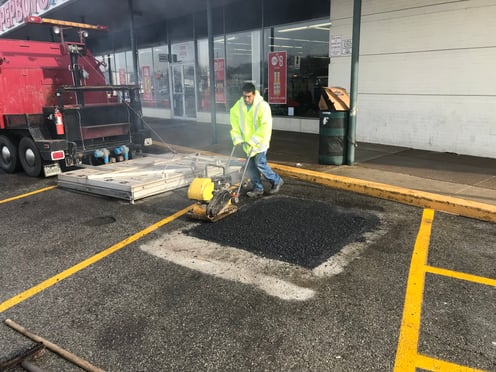 Infrared Asphalt Repair (Best Long-Term Emergency Solution: 5-10 years)
Infrared repair heats existing pavement, blends new asphalt, and thermally bonds the repair area to surrounding pavement.
Benefits:
- Seamless repair with no cold joints
- Longer service life
- Can be performed overnight
- Minimal disruption to operations
- Helps stabilize surrounding pavement
Typical cost:
- Often packaged programs such as $3,000 – $5,000+ depending on quantity and size of repairs
This method is ideal when:
- Potholes are scattered
- Facility must remain operational
- Manager needs repairs to last multiple years
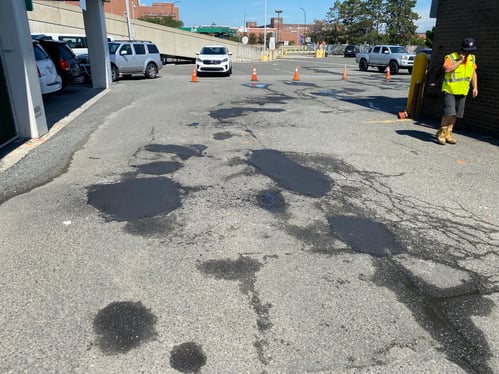 Throw-and-Patch (Fast but Shorter-Term Solution: 3-7 Years)
Traditional saw-cut or placement patching involves removing loose material and installing hot mix asphalt.
Benefits:
- Lower upfront cost
- Fast emergency stabilization
- Suitable when pavement will be milled and paved soon
Limitations:
- Cold joints can allow water infiltration
- Shorter lifespan compared to infrared
- May require more frequent maintenance
Typical program cost:
- $2,500 – $10,000+ depending on quantity and severity
Night Work and Emergency Pricing Considerations
Many commercial properties require repairs outside business hours.
Night work pricing may increase due to:
- Labor shift premiums
- Reduced asphalt plant availability
- Traffic control and lighting requirements
- Mobilization urgency
However, performing repairs overnight allows:
- Repairs to fully harden
- Reduced risk of power steering damage
- Safer work zones
- Minimal disruption to tenants and customers
This approach is often preferred for retail centers, logistics facilities, and medical campuses.

Liability Risk: The Real Cost of Ignoring Potholes
Emergency pothole repairs are not just a maintenance decision — they are a risk management strategy.
Unrepaired pavement defects can lead to:
- Insurance claims
- Slip and fall lawsuits
- Tenant complaints
- Lost business reputation
- Emergency capital spending
Proactive repairs help facility managers demonstrate due diligence and maintain safe property conditions.
Best Strategy: Combine Emergency Repairs With Ongoing Inspections
 The most successful commercial property owners:
- Inspect parking lots 3–4 times per year
- Address potholes immediately
- Perform annual crack sealing
- Consider targeted overlays in high-traffic zones
This approach can delay full reconstruction by years and improve budgeting predictability.
Questions & Answers: Emergency Pothole Repairs for Commercial Parking Lots
How much does emergency pothole repair cost in New Jersey, Eastern Pennsylvania, and Delaware?
Emergency pothole repair for commercial parking lots typically costs between $2,500 and $20,000+, depending on the number of potholes, size of failed areas, repair method used, and whether work must be performed overnight or on an urgent basis.
What is the best method for emergency pothole repairs?
Infrared asphalt repair is often considered the best emergency repair method because it thermally bonds new asphalt to the existing pavement, creating a seamless repair with a longer service life. Traditional throw-and-patch repairs can be effective for short-term stabilization, especially if full milling and paving is planned in the near future.
Why does emergency pothole repair sometimes need to be done at night?
Many commercial properties require overnight repairs to avoid disrupting business operations. Night work allows repairs to fully harden before traffic resumes, reducing the risk of damage from turning vehicles, power steering marks, and heavy delivery traffic.
Does emergency night work increase the cost of pothole repairs?
Yes. Emergency or overnight repairs can increase costs due to labor shift premiums, asphalt plant coordination, lighting requirements, and traffic control measures. However, completing repairs overnight can improve repair performance and reduce business disruption.
What happens if potholes are not repaired quickly?
Delaying pothole repairs can lead to trip and fall liability, vehicle damage claims, accelerated pavement failure, and higher long-term repair costs. Small potholes can quickly expand and lead to structural pavement damage requiring milling and paving.
How long do emergency pothole repairs last?
Infrared repairs can last several years depending on pavement condition and traffic volume. Throw-and-patch repairs may last one to several seasons, particularly when used as a temporary stabilization method before larger paving projects.
Can emergency pothole repairs help delay milling and paving?
Yes. Addressing potholes early helps stabilize pavement and prevent water infiltration, which can extend the life of a commercial parking lot and allow property managers to better plan capital budgets.
Need Emergency Pothole Repairs in NJ, Eastern PA or Delaware?
FixAsphalt provides:
- Infrared asphalt repair
- Saw-cut patching
- Night and emergency scheduling
- Portfolio maintenance planning
Contact us to discuss the condition of your parking lot and available repair options.



Leave a Comment