



After a Winter Like This, Parking Lots in New Jersey Won’t Look the Same in March (2026 Property Manager Update)
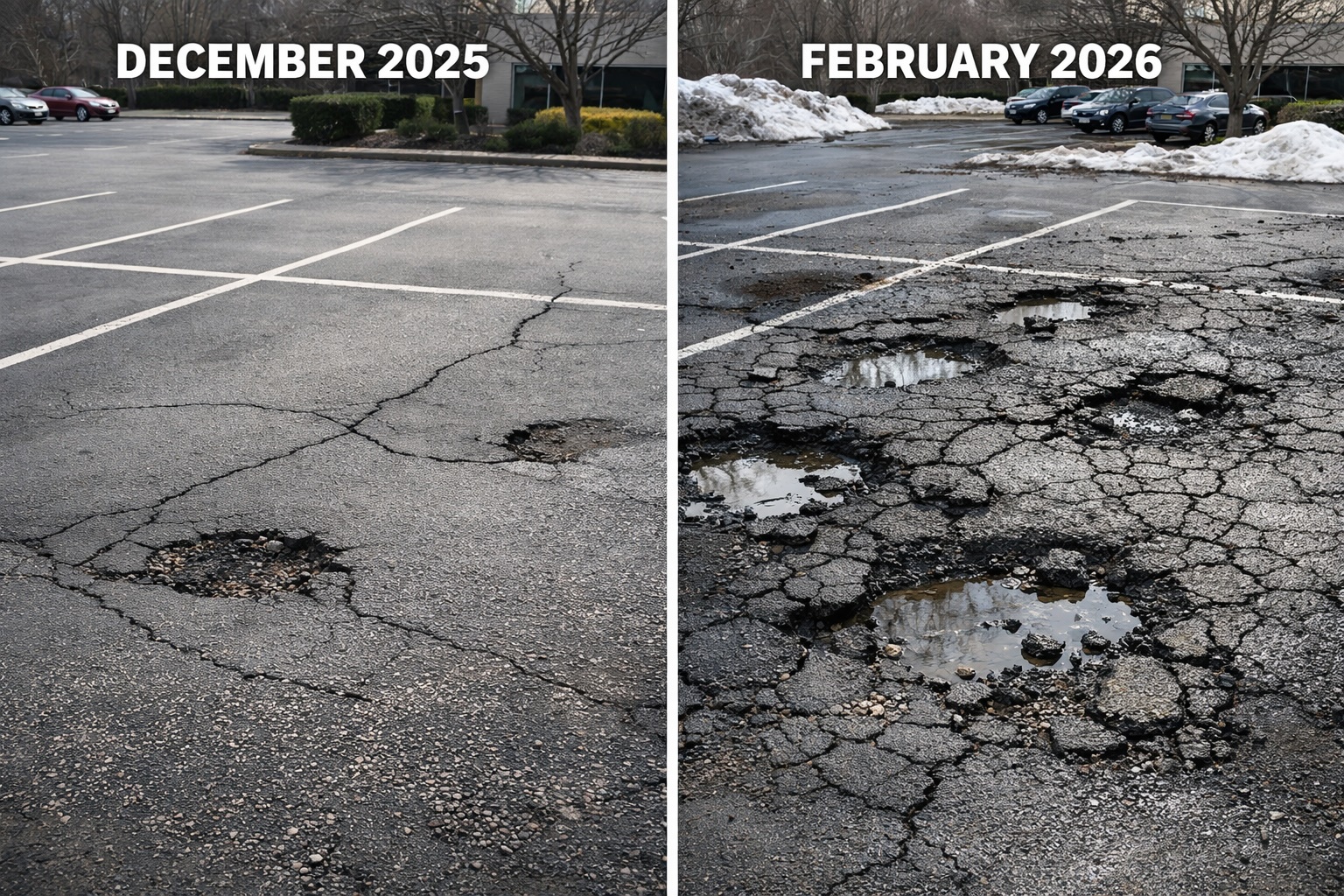
This has been a tough winter across New Jersey.
Between repeated snow events, extended freezing temperatures, and polar vortex conditions, parking lots across the region have taken a beating.
For many property managers, this creates a familiar but frustrating situation.
You scoped and budgeted asphalt repairs back in November or December of 2025 — based on what the parking lot looked like at that time.
But after a winter like this one, the parking lot you inspect in March may be in significantly worse condition.
That’s not poor planning.
That’s how asphalt behaves during harsh winters in the Northeast.
When Parking Lots Start Winter in Poor Condition
If a parking lot entered winter already showing signs of deterioration, such as:
- Widespread cracking
- Multiple potholes
- Failing patches
- Movement around catch basins
- Surface fatigue
Winter rarely improves the situation.
In fact, it almost always accelerates the damage.
Small problems going into winter typically become larger problems by the final thaw.
Why This Winter Has Been Especially Hard on Pavement
This winter created the perfect conditions for asphalt deterioration in New Jersey.
We’ve seen:
- Repeated snowstorms
- The Polar Vortex is situated over us for most of January and the beginning of February
- Heavy salting
- Prolonged freezing temperatures
- Rapid temperature swings
- Multiple freeze-thaw cycles
When water enters cracks in asphalt and freezes, it expands and fractures the pavement from below.
This process repeats throughout the winter.
By the time temperatures begin to stabilize in March, the accumulated damage becomes fully visible.
That’s when potholes begin to appear rapidly, and cracks spread across parking lots that were already vulnerable.
Scopes Created in Late 2025 May No Longer Reflect Reality
One of the most common conversations we have with property managers in early spring is this:
“The parking lot didn’t look this bad when we walked it in November.”
That’s completely normal.
Budgets and scopes created before winter are based on pre-winter conditions, not post-winter reality.
After a winter like this one, it’s common to see:
- Additional potholes
- Expanded cracking
- Base failures emerging
- Catch basin settlement
- New trip hazards
This often means repair priorities need to be reassessed.
Snow Budgets vs. Pavement Maintenance
Another challenge this year is that snow budgets have been heavily impacted.
Between plowing, salt, and labor costs, many properties have already exceeded their winter maintenance budgets.
That’s understandable.
But delaying pavement repairs after a winter like this usually makes the situation more expensive later.
For most commercial properties, the parking lot and the roof are two of the largest capital assets on the property. When maintenance is postponed due to budget pressure, deterioration continues.
With asphalt, problems compound quickly once winter damage is present.
Potholes expand.
Cracks widen.
Water penetrates deeper into the pavement structure.
Repairs that could be handled early in the season often become larger and more costly projects later.
The same principle applies to roofing systems after a harsh winter.
Even modest spring repair budgets can prevent significantly larger capital expenses later in the year.
Why Early Spring Inspections Matter
After a winter like this, spring inspections are critical.
Late February through early April is when winter damage becomes fully visible.
A post-winter inspection allows property managers to:
- Reassess pavement condition
- Update repair priorities
- Address safety concerns
- Prevent further deterioration
- Protect long-term pavement value
This is especially important for properties where the parking lot was already aging or showing signs of distress before winter began.
Final Thought
This winter has been a reminder of how quickly pavement conditions can change in New Jersey.
If parking lots were already in fair-to-poor condition when scoped in late 2025, they will almost certainly be in worse condition by the time spring arrives in 2026.
That’s not a failure in planning — it’s simply the reality of maintaining asphalt in a Northeast climate.
The key is reassessing early and addressing damage before it spreads.



Leave a Comment